Sidhe nobility have divided themselves into different houses or affiliations. Each of the five noble houses has distinct philosophies and bestows a certain reputation upon its members, whether those members deserve it or not. To belong to a house is to espouse its beliefs and dictums.
Only sidhe are traditionally considered true nobility and able to belong to houses. With the end of the Accordance War,
however, many commoners joined houses or were awarded membership in them. Not all sidhe choose to join a house,
preferring to remain unaffiliated. While this can hinder their chances for advancement in the court hierarchy, these sidhe
frequently no longer care about the trappings of court politics.
Seelie Houses

House Dougal
(Changeling: Second Edition, pp. 106-107; Noblesse Oblige: The Book of Houses, pp. 9-31)
Known for its practicality, common sense and no-nonsense attitude, House Dougal values order and preciseness above the more “flighty” qualities of the other noble houses. Architects of sidhe society, these nobles seek to expand their domain through wise and prudent planning.
Click to show/hide
Boon: Members of this house are strong-willed and known for their ability to invest Glamour into everything they do. Once per story, a member of this house can convert a portion of her temporary Glamour points into temporary Willpower points ( up to the level of permanent willpower ). This must be done during some sort of physical exertion: working, exercising or participating in combat.
Flaw: Physical reality seems flawed to these fae, just as they are flawed. Only through hard work can they overcome these flaws. Sidhe of this house always have a physical handicap that must be compensated for. This is usually something that can be corrected by cunningly crafted smithwork: a mechanical leg for a club foot, an intricate eyepiece for poor vision, and so on. These handicaps are present, though not always visible, in their mortal seemings.
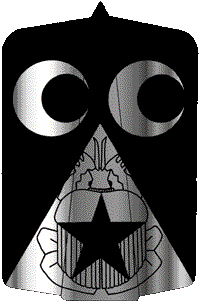
House Eiluned
(Changeling: Second Edition, pp. 107-108; Noblesse Oblige: The Book of Houses, pp. 33-53)
House Eiluned has a reputation as the House of Secrets, and many of its.members excel in the faerie Arts. Masters of intrigue and subtlety, they are valued for their arcane knowledge but distrusted for their secretive behavior. The reputation of their founder, the sorceress Lady Eiluned, has blackened that of the house as a whole.
Click to show/hide
Boon: All members of this house have an impressive talent for magic. All cantrips cast by Kithain of the House Eiluned automatically gain an automatic success.
Flaw: Members of this house have an overwhelming curiosity and are attracted to mysteries and conspiracy. An Eiluned must spend a point of Willpower to avoid meddling in a mystery or becoming involved in a plot. Some even have a treacherous streak, briefly becoming Unseelie to form a dark alliance and then turning Seelie to prove their innocence. The Kithain distrust many of them; the difficulties of all their Social rolls are increased by one.
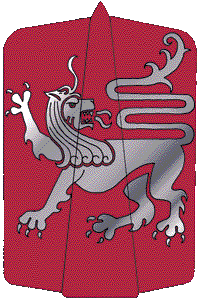 House Fiona
(Changeling: Second Edition, pp. 108-109; Noblesse Oblige: The Book of Houses, pp. 55-77)
Passionate and headstrong, House Fiona bears a wild streak that shows even among its most conservative members. Indulging in all forms of sensual gratification, members of this house are notorious for their radical thinking and
impulsive behavior. They are equally quick to love or anger, and give themselves utterly to whatever cause they espouse. Their hospitality toward commoners and nobles alike is legendary.
Click to show/hide
Boon: Defiant to the last, Fiona sidhe are renowned for their great courage. Though they understand fear, it does not control them, even in the face of death. Any attempt, natural or magical, to generate fear in them automatically fails. Only threats to a lover’s life can frighten a Fiona, and they often succeed very well.
Flaw: Sidhe of this house have an overpowering attraction to danger. Even if the object of their pleasure is somewhat safe, they can find a way to make it dangerous. This is especially true of their romantic trysts, which are usually epic and almost always tragic. Creatures of pure ethereal beauty, they tend to fall in love with outlaws, strangers, wanderers, mortals and other ‘unacceptable’ types. Often such loves become true and complete passions that cannot be denied. Some of them overcome this Flaw, but only by becoming hateful towards all romance. The most tortured become obsessed with preventing it from occurring to anyone they know.
 House Gwydion
(Changeling: Second Edition, p. 109-110; Noblesse Oblige: The Book of Houses, pp. 79-105)
If the sidhe believe in their innate right to rule the commoners, the Gwydion sidhe;believes it is
their destiny to rule the sidhe. Members of this house demonstrate the best and worst aspects of true nobility. Valuing honor above all and dedicated to the defense of the Dreaming, they also demonstrate a tendency to violent outbursts that often lead to tragic ends.
Click to show/hide
Boon: With a successful Perception + Kenning roll, members of House Gwydion can sense if someone is telling the truth; the difficulty is the subject’s Willpower. For some reason ( perhaps by an ancient pact ), members of House Eiluned are immune to this.
Flaw: Although they are great warriors, sidhe of this house are prone to great rages. Whenever they reach the Wounded Health Level ( from either chimerical or physical damage ), or when their honor is insulted, they must make a Willpower roll ( difficulty 5 ). Those who fail fly off into a berserk rage and attack anyone near them, ally or enemy. While berserk, they ignore all Health Level penalties until they reach Incapacitated.
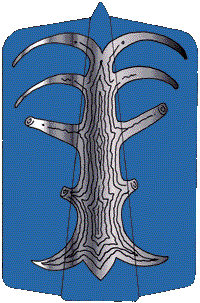
House Liam
(Changeling: Second Edition, p. 110; Noblesse Oblige: The Book of Houses, pp. 107-129)
Since their return, members of House Liam have developed a sense of duty toward mortals, protecting them from the abuses of Ravaging by the fae. Although they are gentle and soft-spoken, nobles of this house make fierce warriors when called upon to defend the helpless:or the innocent. They often serve as sages and record keepers to other noble houses, despite the stigma of di|fcace attached to their name.
Click to show/hide
Boon: Liam sidhe find it easy to affect mortals with Glamour. The difficulty to affect any mortal ( whether casting a cantrip or enchanting ) is always lowered by one.
Flaw: Because of their mortal affiliations, Liam sidhe begin with one extra point of permanent Banality. Furthermore, these sidhe are known as oathbreakers. No other changeling will honor their oathbonds, hospitality or justice. Liam fae are frequently the target of discrimination.
Unseelie Houses
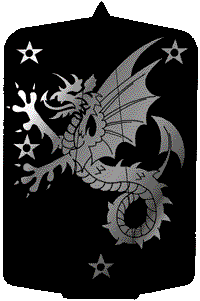 House Ailil
(Pour L’Amour et Liberte: The Book of Houses 2, pp. 5-50, The Shadow Court, pp. 62-63; Book of Lost Dreams, pp. 40-42)
House Ailil is perhaps the best known of the Unseelie Houses. They take an active role in changeling politics, openly opposing the stranglehold on power that the Seelie Court possesses. In Concordia, they are often found as a small, underrepresented, yet highly vocal, minority in the Parliament of Dreams. Ailil fiefdoms are rare, and are almost invariably Unseelie. They are watched with care by Seelie rulers, as they are hotbeds of Unseelie insurrection and Shadow Court manipulation.
Click to show/hide
House Ailil wants to restore the ancient traditions of half-year rule, wherein the Unseelie Court would control land and political moves for the fall and winter of the year, and then restore the crown to the Seelie for spring and summer. House Ailil claims that the Seelie have betrayed the trust of the Unseelie Courts, and grossly destabilized the Dreaming itself by reneging on their promises. Some among their number suggest that it is not too late to return to this practice, and are ready to make the exchange in any year the Seelie will finally agree to it. Others believe that the Seelie control of the past six hundred years has upset the balance, and that only an Unseelie control for the next six hundred will clear the slate.
House Ailil provides much of the leadership for the Unseelie Court, defending Unseelie commoners and the other Sidhe, and invariably acting as the open adversaries for House Gwydion. Despite the noble face of this House, its members see themselves as unjustly wronged by the Seelie Court, and are fully prepared for all manner of treachery to revenge themselves. Assassination, kidnapping, framing, conspiracy, blackmail, seduction, deception, and more are all common weapons in the Ailil arsenal. They are strong believers in doing the job themselves, but also see the need for monkey’ss paw and thugs, to keep their own hands clean. Internal competition is common and expected in the House.
Boon: Sidhe of House Ailil are experts at political manipulation. All rolls involving manipulation are made at a -1 difficulty, Members of House Ailil can never botch rolls involving Subterfuge or Politics.
Flaw: Despite their insistence at the great differences between their House and their enemies of House Gwydion, members of House Ailil are cursed by the same arrogance of the Seelie adversaries. Ailil are almost totally incapable of admitting their own mistakes. They tend to take on tasks that others would shy away from, convinced that their own cunning or skill will see them through. In non-combat situations, they must make a Willpower roll (diff. 8) to admit that they are wrong, even when it is obvious to everyone else, and even themselves. If they back down from a situation, such as a battle they know they cannot win, they suffer a +1 difficulty to all Social rolls until they gain some sort of victory that restores their confidence and their face. House Ailil nobles are likely to abuse their underlings in these situations, taking some pleasure in showing up those who are beneath them.
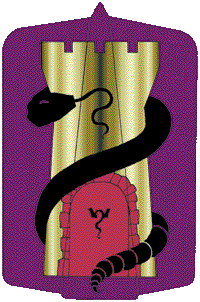 House Balor
(Pour L’Amour et Liberte: The Book of Houses 2, pp. 103-149; The Shadow Court, pp. 63-64; Book of Lost Dreams, pp. 42-43)
Most Sidhe who hear the name House Balor regard it as little more than a jest, a cruel joke designed to aggravate Traditionalist Sidhe. House Balor derives its name from a powerful Fomorian king named Balor of the Evil Eye, whose gaze could destroy his enemies.
Click to show/hide
More than any other House, the Sidhe of House Balor believe that Winter is almost upon the world. Without a strong hand to lead them, the fae will surely perish. House Balor fully intends to set itself up as overlords of humans and Kithain alike, demanding tribute and guiding the waking lands and the Dreaming through Winter with an iron fist. Until this goal can be reached, the fae of House Balor cultivate allies among the Unseelie Court, both commoner and Sidhe. Additionally, these Sidhe are always on the look-out for Prodigal races who can be converted to their cause; already they have found allies among several shapeshifter species, especially a twisted race of werewolves who call themselves Black Spiral Dancers. House Balor forms alliances with a number of murderous, dark, and twisted spiritual organizations and supernatural races; many whisper that chimera of Nightmare are found commonly in the council-chambers, and even the beds, of this House.
At their worst, House Balor are insane tyrants, desperate to seize control of mortal and fae worlds alike and grind them beneath their boot. Others, however, point to a proud history of betrayal in the past of House Balor; some optimists claim that just as Lugh drew upon his Fomorian and Sidhe magicks to destroy Balor, so is it likely that the Sidhe of House Balor form alliances with dark creatures only to betray them one day. Many insist that their convoluted genealogy cannot help but force them to knife their current allies in the back, and that, should Winter ever come, they will be staunch allies of the Seelie Court, secret infiltrators of the Nightmare camp.
For now the Sidhe of House Balor are content to plot with the Unseelie Court, forming alliances wherever they can among Kithain, Gallain, and Prodigals. While whispers link the Shadow Court to the Sidhe of House Balor, it seems as if the two organizations each have their own agenda. Many Sidhe of House Balor masquerade as members of House Eiluned or Dougal, worming their way into the Seelie Court. Most of them regard the Seelie Court as weak, and constantly probe and test it for opportunities to strike at it. Many members of House Balor enjoy politics, and are masters of treachery, though their flair for the dramatic tends to unmask them before too long, another example of their unhidable flaws, perhaps. Many of them are quite decadent and debauched, and demand total obeisance from their vassals.
Boon: The fomorian blood of these sidhe shields them from the worst effects of cold iron. Cold iron still causes them discomfort, but Balor sidhe take no penalty when performing tasks that involve contact with it. They do not lose temporary Glamour when struck with it. If slain by an iron weapon, however, their faerie souls are still destroyed.
Although every Balor sidhe has a Seelie Legacy, it is always subdued. Though they can masquerade as Seelie sidhe, they will never actually become Seelie. For members of House Balor, that’s a boon.
Flaw: Each member of this house has a physical, mental, or emotional deformity. Neither prosthetics nor psychological help can correct it, though it can be hidden. This Flaw can never be overcome. In addition, a Balor Sidhe cannot have a Willpower rating higher than 6.
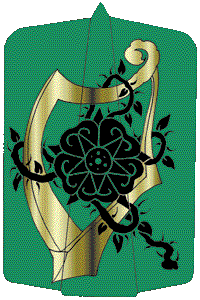
House Leanhaun
(Pour L’Amour et Liberte: The Book of Houses 2, pp. 53-100, The Shadow Court, pp. 64-65; Book of Lost Dreams, pp. 43-44)
Members of House Leanhaun are often seen as the most moderate of the “Winter” Houses, for they throw their lot in whole-heartedly with the Unseelie Court. A few Seelie Leanhaun exist, but they are by far the exception to the rule. They are traditionally viewed as hedonists and rakes, fond of mortal company, and extremely vain. A tradition of musical and poetic skill runs through this House, and many of them find employ as the bards, harpers, talesingers, and historians for other Sidhe.
Click to show/hide
In truth, House Leanhaun carries a terrible burden, which forces them to engage in activities that the extremists among the Seelie Court cannot permit. The Sidhe of House Leanhaun are cursed with unnatural aging, as their bodies continue to crave Glamour. Without a constant and plentiful supply, members of this House sicken and wither, physically aging in both their fae and mortal appearance, and even passing through the various Seemings (from Childing to Wilder to Grump) as the years mount.
Members of House Leanhaun are known for their beauty and style, and many of them are vain sensualists. They live in dread of the House’s bane, and resort to brutal methods of gathering Glamour to abate their curse. Though they control few Freeholds, they have mastered the art of Epiphanies, and are masters of Reverie and Ravaging.
In many cases, however, this Glamour is not enough to abate the hunger that a Leanhaun has, and so she chooses instead to Rhapsodize mortals. This method of Epiphany infuses a human Dreamer with Glamour, causing his creativity to burn like wildfire, producing some of the greatest art of their lives. However, this process inevitably burns out the artist, causing many of them to waste away or even take their own lives. Since the Resurgence in 1969, a number of great musicians, poets, painters, and the like have perished as a result of the Leanhaun’s tender mercies. Their creativity reached heights it might never have soared to, but they paid the ultimate price, all as the Leanhaun watched on.
Though House Leanhaun enjoys good relationships with some Kith, they are always slow to reveal their secrets, and never offer full membership in their House to any non-Sidhe. The commoners are far more useful as retainers and allies, free of the curse which afflicts the members of this House, and perhaps even unaware of it. Many consider House Leanhaun to be doing little more than upholding the Unseelie Code, which preaches that “Glamour is free.” Rhapsody, Ravaging, and the suffusion of all aspects of life with constant sources of Glamour allows a Leanhaun to pass as any other Sidhe, and thus they sometimes wear the colors of House Fiona or Eiluned, and are virtually undetectable in these guises, with their smooth ways and silver-tongues. There is a definite enmity between Houses Leanhaun and Liam, most likely over the Leanhaun abuse of mortals. These two Houses have crossed blades more than once, and neither will trade with the other. Many members of House Leanhaun, when they have the ear of Seelie lords, warn against too many dealings with the Oathbroken House of Liam, claiming that they have never proven their alliegence to the fae over their love of humans.
Boon: Members of House Leanhaun acquire an extra point of Charisma, even if this raises the Attribute above 5. Also, all Seduction rolls are made at a difficulty reduced by one, and cannot be botched.
Flaw: Because of an ancient curse upon their house, nobles of House Leanhaun age rapidly. Those who do not engage in the forbidden practice of Rhapsody once per month age one year for each week beyond this time that they avoid this predatory epiphany, which robs the Dreamer it is enacted upon of the ability ever to create anything of any merit again. Rhapsody is a violation of the Right to Dream as set down in the Escheat and is severely punished where it is discovered.
Lost Houses
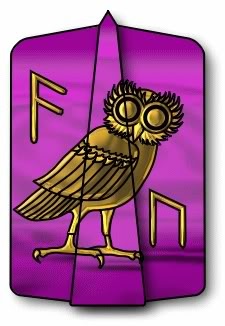
House Aesin
(Book of Lost Houses: The Second Coming, pp. 33-51)
Originating in the icy regions of Scandinavia, the Sidhe of this house refer to themselves as “Guardians of the North.” House Aesin are lords over nature and able to speak to animals, but like the icy domain they rule, they feel little when it comes to commoners that don’t know their place. Despite being highly dutiful and honorable warriors, the majority of House Aesin find themselves on the unseelie side of things.
Click to show/hide
Flaw: While still caring for their subjects, changelings belonging to House Aesin have a tendency to have a master-slave relationship with them. Nevertheless, they feel obligated to protect their loyal servants, and occasionally they might feel something else for them. In the end, however, Aesin keep their Deep Dreaming flaw, although the Mists upon reentry in Midgard have weakened it. They receive a +3 difficulty on all Social rolls involving anyone other than nobles. There is only one other exception. For some reason the Dreaming neglects this curse when dealing with the family that belongs to the mortal body who hosts the newly arrived sidhe.
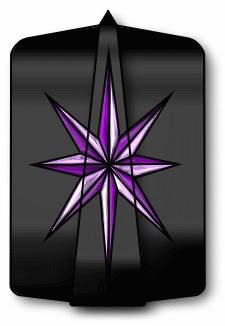 House Beaumayn
(Book of Lost Houses: The Second Coming, pp. 9-31)
The sidhe of House Beaumayn are seers and prophets and sworn enemies of the Shadow Court and all minions of the Fomorians. This oath against the Shadow Court, Thallain, and any awakening Fomorians is so strong however, that the agents of these shadowy affairs can feel when one of this house is near. Originating in France, and the name, roughly meaning “good hand” comes from the house’s founder, Jalendrel the Good-Handed.
Click to show/hide
Boon: All members of House Beaumayn are natural prophets — glimpses of possible futures regularly come to them during dreams and meditation. These visions are often quite cryptic, although the changeling may attempt to decipher them with a successful Intelligence + Gremayre roll (difficulty 8). Remember, however, that no matter how well understood they might be, they are still only possible futures and may not necessarily come to pass. Obviously, these prophecies are the province of the Storyteller, who decides both when and how they appear. When in dire need, however, the Beaumayn may attempt to “bring on” a vision by meditating for several minutes, spending a Willpower point and rolling her Glamour against a difficulty of 11 minus her Remembrance score. One must be careful not to invoke this Boon too often in this fashion, however, or else the threads of probability become tangled, the Dreaming is upset and the visions the character receives become increasingly inaccurate, perhaps even dangerously so!
In addition, due to their relatively fresh memories of Arcadia and their imprisonment, all Beaumayn sidhe receive Remembrance 1 for free during character creation.
Flaw: The unswerving dedication and gifts of prophecy of House Beaumayn have long been a thorn in the side of the Shadow Court and its dark masters. Now with the return of the Fomorians so perilously close to success, the efforts of House Beaumayn pose a bigger threat than ever. Worse, Shadow Court members, those creatures of darkness, can sense the fires of the dark star that burn within house members. Thallain and Shadow Court fae can generally sense when Beaumayn nobles are in the area (Perception + Kenning, difficulty 7), which naturally leads to all sorts of conflicts and story hooks. This doesn’t mean they can automatically detect hidden or invisible Beaumayne nobles. Nor should they all try to maul the character on sight — after all, some of the most sadistic methods of inflicting harm are mental or emotional — but they will do their best to make the Beaumayn’s life miserable once they discover her identity.
Additionally, because of the infamy surrounding their imprisonment, when their true lineage is known Beaumayn sidhe suffer a +2 difficulty on all Social rolls with sidhe of houses other than Liam and Fiona.
 House Daireann
(Book of Lost Houses: The Second Coming, pp. 53-73)
This Unseelie house specializes in warfare, poisons, and oddly enough hospitality. Indeed, members of this house are courageous fighters and renowned hosts, giving their hospitality to friend or foe if asked. House Daireann is a Celtic house named after a daughter of Dagda.
Click to show/hide
Boon: House Daireann members are among the fiercest and most stalwart of all fae warriors. The difficulty of the Dragon’s Ire is always lowered by 1 for members of this house, even if it exceeds the -3 cumulative modifier. Also, they will not flee in combat unless ordered to do so by the ranking war leader (and even then, they’ll be the last people off the field).
Flaw: House Daireann fae can’t keep a secret to save their lives, literally, and stories of these lapsus lingua abound through Celtic legendss. They’re the ones who, in a series of wild brags, explain the one way they can be killed, probably to the wrong person, or share the intimate details of any Geas they’re under. Anytime a fae of House Daireann boasts of her deeds (not an uncommon occurrence), she must roll Willpower with three successes to avoid blabbing some secret. Note that House Daireann fae don’t go spilling the beans to complete strangers, although with a little work, a clever stranger can become a friend.
House Scathach
(Book of Lost Houses: The Second Coming, pp. 95-113)
Barred from the halls of power by the condescension of the other noble houses, members of House Scathach live on the periphery of kithain society, taking it as their duty to defend faerie-kind from hostile outside forces. Little is known of this house, save that its members typcally wear voile of black, grey or white, and that few can match them in a fight.
Click to show/hide
Boon: Those of House Scathach are silent and efficient warriors. They rarely make any sound when fighting, causing great consternation in their foes. Once entering a fight, they lose sight of almost everything else, reaching a hypnotic “fugue state” in which the world seems to move more slowly. Because of the perceived time crawl in this state, they receive an extra die on all Brawl and Melee rolls and make Stealth rolls at -1 difficulty.
Flaw: Most nobles look down upon House Scathach. All Social rolls with other sidhe (except Houses Beaumayn, Fiona, Liam, and Leanhaun) and commoners with strong royalist sympathies are at +2 difficulty (or up to +4 with Traditionalist nobles). Furthermore, because of an ancient blood pact, Scathach are forbidden to use the Art of Sovereign. This ban is enforced by the full weight of the Dreaming. Scathach who have just returned from Arcadia still suffer from the Social difficulties of their house members if those with whom they are interacting know their house affiliation. However, they are not forbidden to use Sovereign as are their Autumn World counterparts.
Sidhe of House Scathach also suffer the following changes to their Birthrights and Frailties…
Awe and Beauty: The beauty of the sidhe is somewhat diluted by the Changeling Way Ritual. Scathach sidhe receive only 1 additional dot of Appearance instead of 2. (The Attribute may still exceed 5.) Note that this does not apply to those Scathach who have just returned from Arcadia.
Noble Bearing: Like most sidhe, those of House Scathach have a raw nobility but no defense against cantrips making them look foolish. This weakened Birthright still means that no Scathach sidhe will ever botch an Etiquette roll. Scathach just returned from Arcadia do not have this weakened birthright.
Blood Madness: Because of their changeling nature, sidhe of this house do not suffer from Banality’s Curse. They do, however, exhibit a strange madness in battle. Although a member of this house will not attack friends or bystanders, she has great difficulty leaving combat until either she, or all her enemies, are defeated, though not necessarily dead or even unconscious. (She may accept an honorable surrender.)
To leave a conflict, the player must make an extended Willpower roll (difficulty 7) and accumulate six successes before retreating. A botch returns this count to its starting point, and the warrior must wait a full turn before attempting to retreat again. A character may burn 1 point of Willpower for only one automatic success during this process. Unlike in the Gwydion Flaw, Scathach in this state take all the usual Health penalties when injured. A Scathach warrior becomes preternaturally silent during combat and has great difficulty speaking above a whisper. To speak more loudly the character must make a Willpower roll (difficulty 7) and may utter one short phrase per success. Recent returnees are subject to this frailty just as their more “common” house members.
Autumn Scathach, unlike other sidhe, also receive a Realm affinity. Their Realm of influence being Nature.
 House Varich
(Book of Lost Houses: The Second Coming, pp. 75-93)
A Russian house named after the progeny of the Sun and the Moon. Members of this Unseelie house are able to discern patterns in anything, whether it be fancy sword fighting, a complex dance, or sport. They also deem themselves to be lords over the Inanimae, as well as Kithain. But despite their claims to these things, they can neither swear an oath of love, nor reject a challenge brought before them.
Click to show/hide
Flaw: House Varich sidhe can never give a vow of love to another. The other houses that came forth with them during hte last few months know this flaw.
They must accept all challenges. If a member of House Varich fails to acknowledge a challenge, she loses 1 point of Willpower per day until she returns the challenge. (Willpower lost in this fashion may not be recovered through the expenditure of experience points or by any other means until the character honors her challenge.) If a challenged member of the House is imprisoned to keep her from accepting the challenge, she loses 1 point of Strength for each day of her captivity (to a minimum of 1 point.) If she remains imprisoned, her Stamina declines by 1 point per week until she “dies” (i.e., forgets her fae nature). As one might expect, house members take care to be courteous to each other and to stay in fighting trim.